This article first appeared in print in the September, 2018 issue of Revelstoke Mountaineer Magazine.
In the landscape trade, this point in the season can feel a bit like the last 10 kilometres of a marathon: the end is in sight but at the same time seemingly infinitely far away. I can imagine most businesses in town can relate. September also marks the end of the summer tourist season and a time when we have a moment to (almost) catch our breath before the snow flies and another ski season begins.
Revelstoke’s popularity as a year-round adventure tourism destination continues to grow along with the opportunities the area has to offer. But amongst all the hustle to shelter, feed and entertain tourists I can’t help but wonder if we will unwittingly go down the road to ‘placelessness,’ on the heels of so many other tourism-based towns.
To be clear, I am not advocating against tourism, but I am interested in how to balance an industry that operates on standardization and uniformity, with the local particularity that celebrates the uniqueness of a place. Ultimately it is these qualities that draw people to a particular area to begin with. Iconic destination cities in Europe such as Venice, Barcelona and most recently Amsterdam have dialed back their tourist destinations in response to locals who are pushing back on the inauthenticity of tourist districts in their cities.
One of the harbingers of ‘placelessness’ is the commodification and privatization of public space. True public spaces like streets, parks, and public squares have been the centre of public life for as long as societies have existed. Theatre was born in the public square along with public discourse and debate. Urban geographers attribute the creativity that emerges from public spaces to the intrinsic freedom or, perhaps more accurately, to the absence of regulation and enforcement found in these spaces. But public spaces are quickly disappearing from the urban landscape – the lack of public space in Revelstoke, for example, is an issue that has been raised in several contexts.
So in the wake of the of endless highway traffic, adventure seekers and tour buses, how do we tap into the creative energy that emerges from assembling as a community in public space, in the true sense of the term?
We have a street party.
It’s no surprise that public festivals have played an important role throughout history in maintaining, disrupting and rebuilding social norms and civic identity. Traditional civic festivals were sites for annual institutionalized disorder, for rituals of reversal that would turn its back on the established order and allow for a break from day-to-day life. These celebrations typically marked transitionary periods between seasons or social customs and functioned as a social pressure release valve.
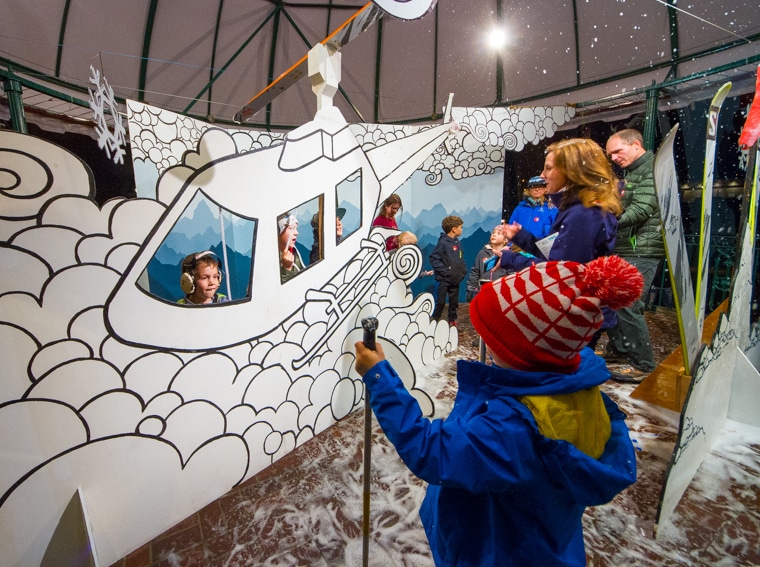
There have been several attempts made at larger scale fall festivals in Revelstoke and granted it is a difficult time to attract tourists, they all fell flat for one reason or another. However, the LUNA Festival debuted last year to wide public acclaim and it seems as though we have finally hit upon a festival that not only promotes the uniqueness of our town and local talent but also provides the pre-conditions for public space in the truest sense. There is no cost to attend, people take over the streets and, most importantly, the art transforms the town — one of the critical elements for public catharsis during a festival is the transformation of the everyday landscape, from the familiar to the fantastic.
It is fitting that LUNA is a festival that celebrates the darkness as we shift our sights to winter and the long nights that come with it. As a mountain town whose identity is strongly influenced by its seasons, it makes sense that we would pause to mark their passing and we are fortunate to have this opportunity to connect with our community.
Lindsay Bourque has been working in the landscape trade for over a decade, first as a gardener/landscaper then earning her master’s degree in landscape architecture at UBC. Since then, she spends more time on a computer, but Revelstoke allows her to keep a foot in both design and construction – and both feet on a board as much as possible.
What did you think of this story?
Your feedback after we publish a story helps ensure we're always improving our reporting to better serve you